The past few weeks have been busy.  I’m in the middle of a few different projects, resulting in some long days and evenings stuck at my computer.  Weeknight meals have therefore become simplified: quick, throw together pastas; fast clean-out-the-fridge tacos; and anything and everything on the grill, which, come springtime, becomes our savior for easy meals that require minimal clean-up.

Cedar-plank salmon is one of those too-easy-to-believe recipes that results in a meal that feels much more luxurious than a harried Tuesday deserves.  A quick brush of Dijon mustard (sweetened with maple syrup, if I’m in the mood), a sprinkle of fresh herbs (almost anything will do) and some salt and pepper is all that’s needed to transform a piece of wild salmon into a starring centerpiece.  The fish gets grilled right on the plank, which gives it a unique and wonderful smoky, herbal flavor.   After about 10-15 minutes, depending on the size of your fish, dinner is served.  The only trick is that the cedar plank needs to soak for at least two hours before grilling, so if you’re going to be home late, plop it in some water before heading to work.

Grilled asparagus, boiled potatoes, leftover grains and sautéed greens are all good accompaniments to the salmon.  Last week it was zucchini “noodles” (tossed with hazelnut oil, lemon juice, basil and chopped hazelnuts), and quickly sautéed spinach, because, well, that’s what was hiding in the vegetable drawer. We ate outside by our newly planted garden, and work felt as far away as winter.


Ever since I developed the Chili Millet Bake recipe, I’ve been dreaming about other “millet bake” variations.  This Italian-take combines white beans, mushrooms and Swiss chard in a rich tomato-based stew, which then gets topped with a thick layer of Parmesan-laced millet.  The whole thing is baked until bubbly around the edges.  The creamy millet, which gets slightly crisp around the edges, is delicious on its own but phenomenal with a garlicky bite of the beans and greens below.

The leftovers are great the next day for lunch… or breakfast.  After an arduous morning of building garden beds a few weeks ago (see rock excavating below), James heated up leftovers of the millet bake and slid a fried egg on top.  With a sprinkle of red pepper flakes and a shaving of Parmesan, it was a breakfast of champions.  He even found the strength to finish the vegetable beds.


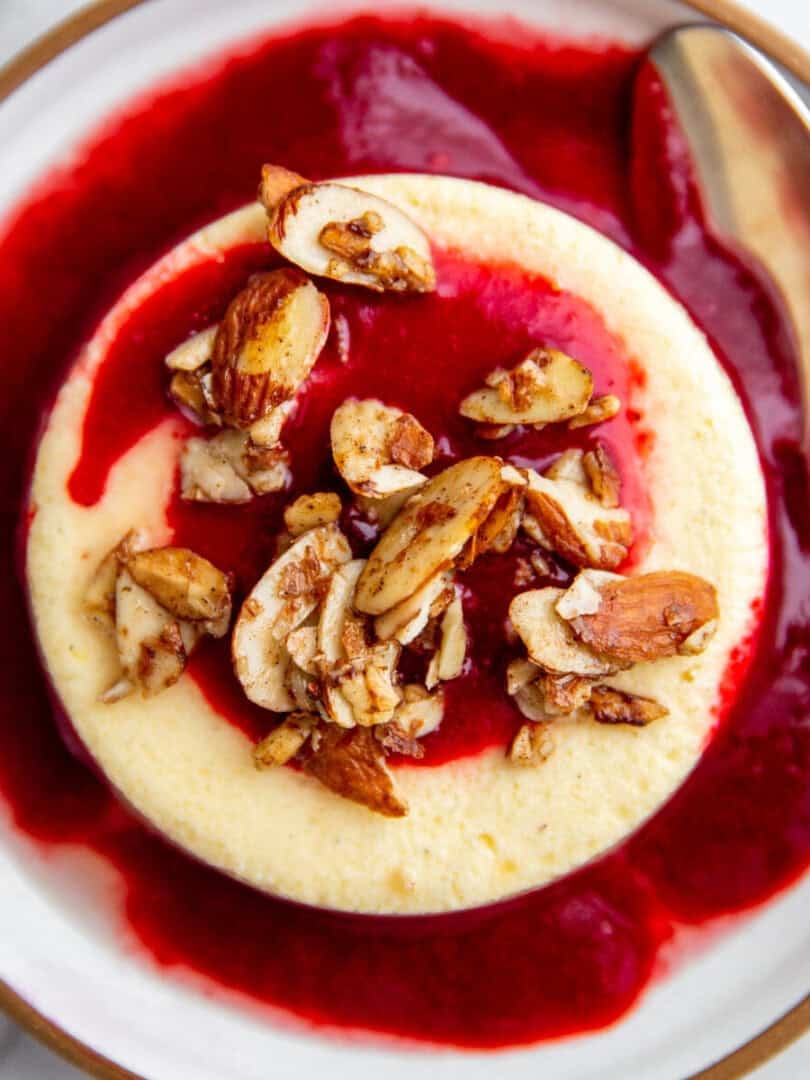
Every once in a while a recipe just doesn’t work out.  Last week I wanted to create a simple and fast fruit dessert using berries and mascarpone for a class I was teaching—I was envisioning a broiled custard-like dish that could be thrown together quickly.  But, long story short, I didn’t like the results.  After numerous tests, and a recipe that was getting increasingly complicated, I backed up and changed routes.  I kept the coconut and lime flavors of the original, as well as the broiled fruit, but instead made a quick panna cotta base.  The result was light yet luscious and perfectly suited for warm weather entertaining.  Sometimes it takes a fail to make a hit.

The panna cotta is adapted from Heidi Swanson’s Super Natural Cooking.  It uses agar agar, a thickening agent made from algae, instead of gelatin (making this vegetarian friendly).  It uses only five ingredients—coconut milk, milk, sugar, lime zest and agar—and comes together in minutes on the stovetop.  Once the agar dissolves and the mixture coats the back of a spoon, it’s strained, poured into ramekins and popped into the fridge to set.  Done.  The result is creamy and delicate with aromas of lime and coconut.

If I’m alone, you might catch me eating the panna cotta by itself straight out of the ramekin—it’s a not-too-sweet tidbit to end a meal.  A topping, however, not only amps up the flavor, but also gives the dish visual appeal.  I know it’s way too early for berry season (at least here in the Northeast), but I couldn’t resist using them here (my spring fever has turned into summer fever).  The flavors of lime and coconut marry wonderfully with broiled blueberries, raspberries and blackberries, which create a syrupy “sauce” that has just the right consistency to drizzle over the panna cotta (it’s also a great sauce for ice cream or pancakes).  For a more seasonal approach, however, try stewed rhubarb or a strawberry coulis. Sprinkled with toasted coconut flakes, it’s an impressive dessert, and nobody has to know how easy it was. This is definitely going to become a summertime staple!


I’m not sure when I first tasted the combination of radishes, butter and salt, but it was well into my twenties.  Growing up in the Midwest, radishes for me were an ignored garnish on iceberg salads, and I can’t remember actually ever eating one whole.  It was either when I studied in France or when we lived in New York City that I must have discovered how delicious they could be—crisp, cooling and slightly spicy, perfect for swiping through a cool dip, or, better yet, slathering with butter.  Butter tames their wild edge, embracing them like cashmere, and a sprinkle of sea salt adds dazzle.  While I personally love the combination, I’ve found that whenever I serve radishes with their squiggly ends trimmed alongside a pot of butter and flaked sea salt to guests, they barely get touched, no matter how beautiful the platter might look.  I have a feeling it’s because eating them is an awkward thing.  Butter doesn’t spread easily on a radish’s slippery surface, and the radishes dry out quickly, turning pale and warped.  So when a friend served me radish butter a while back, it was a revelation.  Slathered over fresh bread (gluten-free, for me), it’s easily one of my favorite springtime nibbles.

The butter comes together quickly.  The radishes are first shredded in the food processor, then squeezed dry.  Room temperature butter—I use a high quality cultured butter—is then whizzed in the same processor (make sure processor is first wiped dry—water is not a friend to fat) until smooth, to which the radishes and sea salt are added.  Serve the butter on baguette slices, toasted crostini, or in tea sandwiches.  I’ve even tossed it with Ella’s pasta.

Oh, and don’t throw away those green tops!  Sauté them like spinach, toss them in your pasta or tear them into your salad.


We’re lucky to live minutes away from a gorgeous farm called Glynwood, a nonprofit farm that not only sells its produce, meat and eggs (through a CSA program and directly off of the farm), but that also works with communities to preserve farmland and support local farmers and sustainability efforts.  A couple of weeks ago Ella and I stopped by to visit the new baby sheep and goats and came home with a satchel of pasture-raised beef, chicken and pork for the freezer (for me, there are few things as satisfying as having a freezer full of delicious dinner options).  One Friday I tossed some pork chops in the fridge on our way out the door for a weekend trip.  On Sunday evening, when we arrived home tired and hungry (and without groceries), the chops were defrosted and ready for the skillet.  A quick pan sauce of pantry staples—shallots, garlic, capers, white wine and some parsley that was bundled away in the vegetable drawer—made for an extraordinary combination with the Glynwood pork.

The sauce is intensely flavorful, and I suspect it would also be an excellent complement to sautéed white fish (think flounder or halibut) or thinly pounded chicken breasts.  The meat itself had an unparalleled flavor—I’m not sure if James was impressed or revolted by the fact that I not only cleaned my bone, but also his.  Farm-raised pork has real flavor that’s as far from the bland (and often tough) chops from the mega-mart as farmstead cheddar is from pre-packaged slices of American.  Paired with butter-roasted potatoes from our cellar and a simple salad of (slightly wilted) greens, it was a beautiful meal that made us forget all about our unpacked suitcases and awaiting laundry.


I’m writing this on the first day of spring, but there are about six inches of snow outside my window.  As I mentioned in my last post, I have a dire case of spring fever.  My inspiration in the kitchen has been waning, sullenly stuck with winter stews while craving spring sautés.  Today called for serious measures.  Out came my daffodil-yellow striped shirt (totally inappropriate for these temperatures), and into the food processor went this pea and goat cheese spread for crostini.  It tastes of spring, even if winter stubbornly refuses to budge.

Peas (either garden fresh, or, in this case, frozen and defrosted) get buzzed with garlic, goat cheese, Parmesan, herbs and lemon juice for a creamy, vibrant spread that’s amazing slathered on garlic-rubbed toast, tucked into ravioli or even tossed with pasta.  It’s makes for a lovely appetizer (either on crostini or as a dip for veggies—think fennel spears, endives, radishes, baby carrots…), and it’s easy to whip together on a moment’s notice.

Close your eyes; take a bite; and forget all about the snow outside.


I don’t know about you, but I have a serious case of spring fever.  I’ve been craving bright new flavors, and, while it’s still too early for asparagus and peas, this is just the meal to trick me into thinking the temperature is twenty degrees warmer.  Sautéed shrimp get tossed with a pumpkin seed & spinach pesto, then layered into corn tortillas with avocados, feta and a lime-dressed Napa cabbage slaw (and, for me, a liberal drizzle of hot sauce).  It’s a quick, nutritious meal that speaks of sunshine, no matter the time of year.

The pesto is made with pumpkin seeds, hemp seeds, spinach, cilantro, jalapeño, lime juice and olive oil—brimming with nutrition and flavor.  It’s slightly smoky and just a tad spicy.  It’s also fabulous on grilled fish, chicken, thinly sliced steak, or spooned into soup (I can’t wait to try it with this Sweet Corn Soup).

As we ate dinner last night, watching the sun sink down the hill in the backyard, we started to plan out our herb plots and garden beds.  Spring is just around the corner.  I can taste it.


As some of you may have noticed, most of my recipes are gluten free.   There’s a reason.  I don’t eat gluten.  I have a thyroid condition, which gluten apparently exacerbates.  Last year my doctor ordered gluten out of my diet.  At first it was a shock.  “What?  How?  I’m a CHEF!  I can’t cut FLOUR from my diet!!”  But as soon as I started to feel the differences it made in my health, I knew the payoff was well worth the cost.  I don’t know if it will be forever, and I don’t think of myself as a “gluten-free” chef (I still develop gluten-filled recipes for clients), but just as somebody who tries to create delicious recipes, whether or not they contain wheat protein or not.

This recipe is the perfect example.  Yes, it happens to be gluten-free, but it’s definitely worth trying, whatever your wheat tolerance.  Buckwheat is a seed (not related to wheat), and (lucky for me) it doesn’t have any gluten.  In France, buckwheat flour, which has a toasted, nutty flavor, has been transformed into crêpes for generations.  This version is incredibly simple, and creates a batter that’s a cinch to work with (you don’t have to worry about throwing out your first batch!).  It might take a crêpe or two to get the hang of swirling the batter into the hot pan (it’s all in the wrist!), but trust me, egg-shaped crêpes taste just as good as a perfectly round ones.

In this recipe, the crêpes get stuffed with a classic combination of melted cheese and ham, brightened with thinly sliced apples and grainy mustard, and topped with lightly dressed greens.  They’re elegant and delicious, equally suitable for Ella’s lunchbox (sans greens) or dinner with friends.  I can’t wait to experiment with other fillings: spinach and mushrooms with goat cheese; lox with dill-scented crème fraiche; chocolate, pears and hazelnuts; apple compote with honey and fresh ricotta…

Believe it or not, omitting gluten from my diet has been easier than I thought.  While there certainly are challenges (I’ll never enjoy being that girl at the restaurant who can’t eat gluten), from a chef’s standpoint, it’s actually been really interesting.  My eyes (and palate) have opened up a world of ingredients that I hadn’t experimented with before, such as millet, teff, amaranth, nut flours, and, of course, buckwheat.  Delicious!


I studied in the south of France during college, and like so many cooks before me, it’s where I discovered my passion for food.  As the weather cooled, my host mom (mère Michelle) would serve a steaming bowl of potage to start each meal.  It was a thick soup of pureed vegetables—whatever she picked up from the market that day—with root vegetables as the base.  It was hazy with aromas of garlic and herbs, warming and pure.  This version is as simple as it is satisfying.  It has a base of onions, carrots and celery, scented with garlic and thyme, and is thickened with sweet potatoes.  The whole thing comes together in less than thirty minutes.  To make a meal of it, I serve the soup with cheddar crisps, my own American-grilled-cheese interpretation.  This is comfort food, after all.  Baguette slices get toasted until crisp, then topped with shredded cheddar (or whatever cheese I have on hand) and popped back in the oven until the cheese is melted.  Sometimes I rub the toasted bread with garlic before adding the cheese, for an extra kick.

The meal takes me right back to France, while rooting me here in America.  It’s the perfect meal to escape these mid-winter meal blues.


Meet my new obsession.  After moving to the Hudson Valley last year, I’ve been dreaming about falafel.  It’s one of my favorite comfort foods—born during our years in New York City—but there are none to be found in these parts, not even any facsimiles.  Thus began my crusade to create my own.  Let me tell you, it’s been worth every bite.  These ladies are verdant with fresh herbs (literally, notice their green color), garlic and spices, with a crisp crust and tender center.  Drizzled with a bright, lemony Tahini Yogurt Sauce, they beat any falafel stand.  Oh, and did I mention that they can be either baked or fried?  Mmm, mmm, I’m doing my falafel dance.

I have to be honest, this recipe doesn’t quite meet my parameters of “meals and recipes from scratch in under an hour,” but it’s close, and the results are worth breaking the rules slightly.  It’s still very doable during a workweek with a bit of planning.  The first step actually starts the day before—soaking the chickpeas.  I love Sally Fallon’s cookbook Nourishing Traditions, and she recommends soaking the chickpeas in boiling water and lemon juice.  Not only does this make the chickpeas more digestible and nutritious, but it also makes for an incredibly smooth-textured falafel.  The soaking plumps and hydrates the chickpeas so they don’t need to be cooked at all before making the patties.  They’re simply drained then blended with the rest of the ingredients in a food processor.   I spread the mixture out into a pan and pop it into the freezer to help it cool quickly (this helps the falafel hold their shape).  From there, the mixture is formed into patties and then fried or baked.

I highly suggest giving frying a go—it creates a more authentic result with a lighter texture, moister center and a crisper crust.  Deep frying gets a bad rap for being difficult and unhealthy, but in reality, it’s not hard at all and not much worse from a health standpoint than sautéing (if done properly not much oil is absorbed).  The trick is to get the oil to the right temperature.  I confess I hardly ever use a thermometer but instead throw a little bit of the falafel mixture into the pot to test the temp; if it starts bubbling, it’s ready to go.  If it sinks with no action, the oil is too cold, and if it sputters like a madwoman and browns instantly, it’s too hot.  You’ll get a feel for it, I promise.  Baking the falafel is a great alternative, but you’ll get denser and drier patties (the flavor is still delicious, however, and it’s nothing a little extra Tahini Yogurt Sauce can’t fix). Now I have even fewer reasons to make the trek back into the city to satisfy my food cravings.  Although, I have been pining for some pastrami…