Easy Gochujang Salmon Bowls
This gochujang salmon recipe turns simple salmon into a quick Korean-inspired dinner with a sweet and spicy glaze, garlicky vegetables, and a creamy coconut sauce. It's bold, comforting, and ready in about 30 minutes, making it perfect for weeknights when you want something flavorful without extra fuss.
Why You’ll Love This Gochujang Salmon Recipe
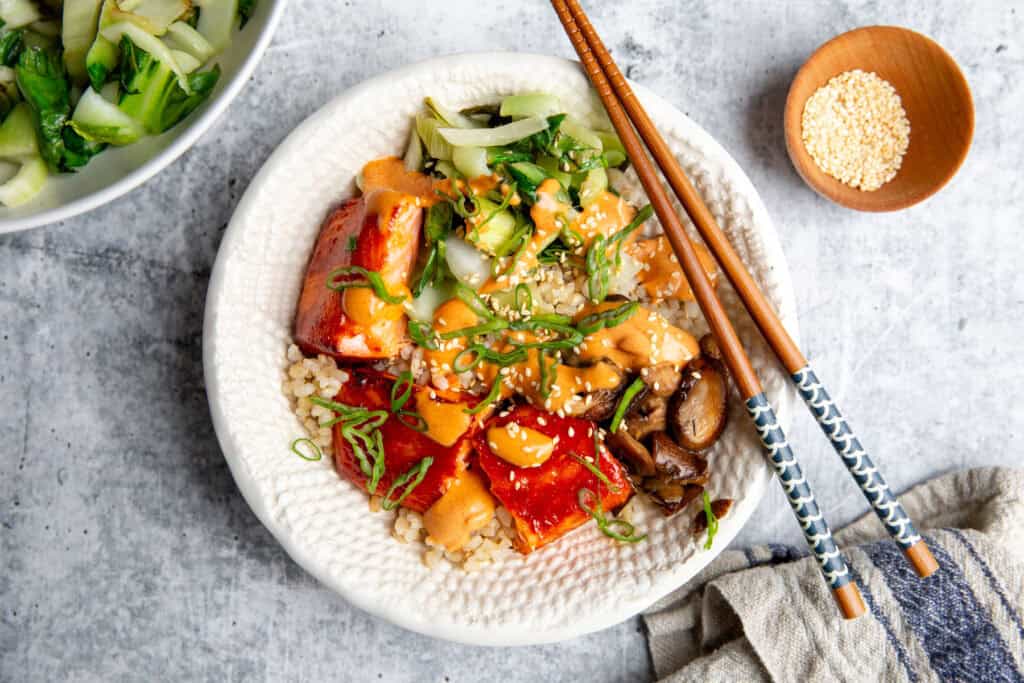
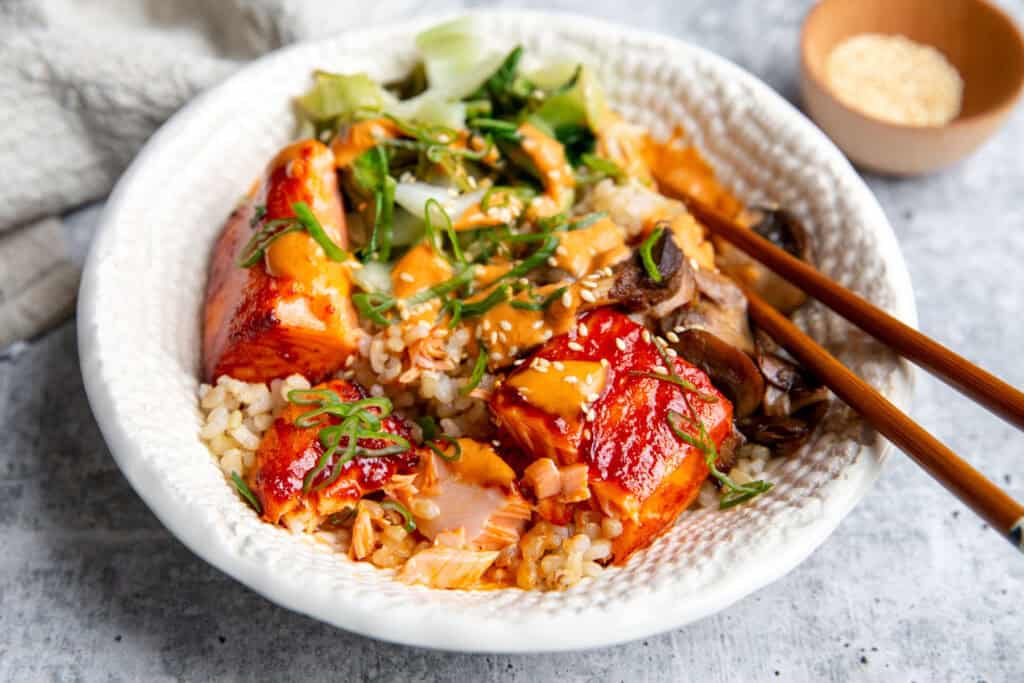
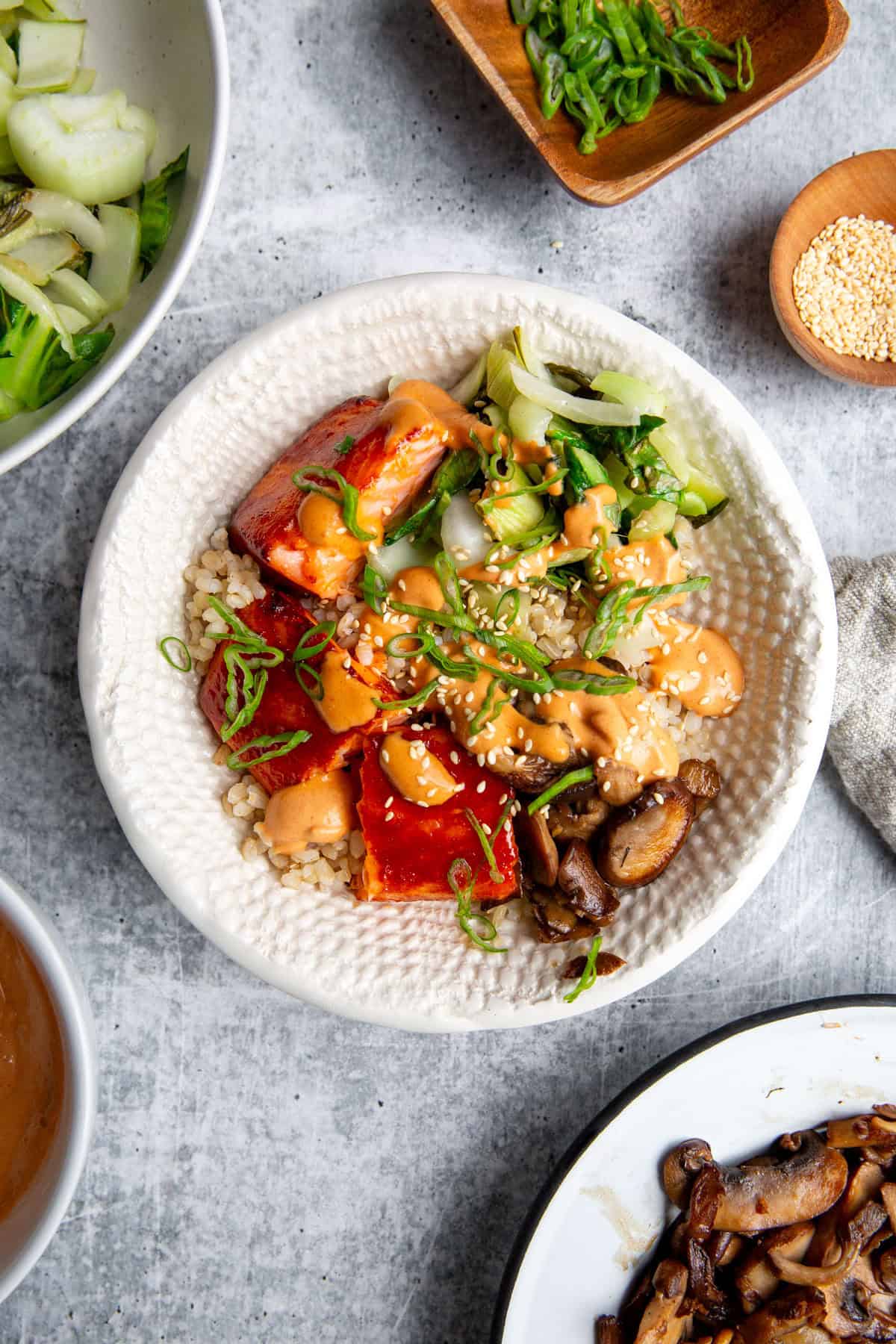
I wrote a whole book about one-bowl meals, but these salmon bowls might just be my favorite yet. They feature savory-sweet gochujang glazed salmon, garlicky bok choy, caramelized tamari mushrooms, and a creamy coconut gochujang sauce. The glaze does double duty as both a topping for the salmon and the base for the sauce, creating a balanced meal that's easy to pull together.
Nicki's Tip: The recipe builds on the ideas in my Build-a-Bowl cookbook. The glaze was adapted from the Bibimbap-Style Steak Bowls, and it gives the salmon a rich, caramelized finish. Coconut yogurt adds creaminess to the sauce, but mayonnaise works just as well if you prefer. While I love pairing the salmon with bok choy and mushrooms, you can use any vegetables you have on hand.
For more ideas, try my Tamari Salmon Rice Bowls with Tamari-Sesame Sauce or Miso Glazed Salmon Recipe.
Ingredients You’ll Need
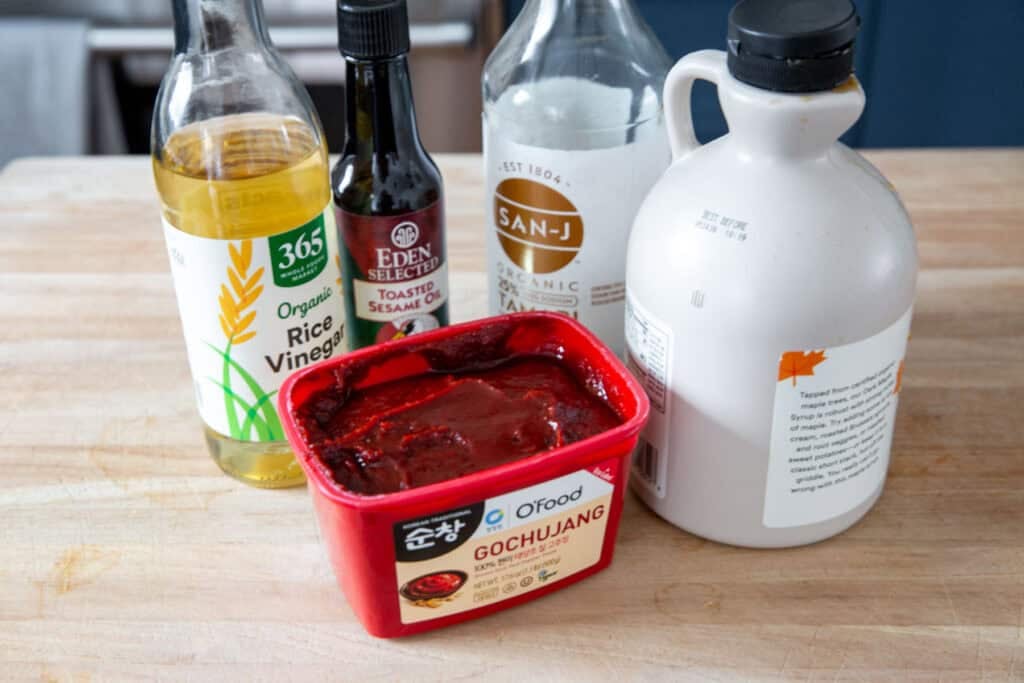
Gochujang Salmon Marinade
- Gochujang paste: Gochujang paste is the heart of this recipe. It's a Korean fermented chili paste that's sweet, spicy, and full of umami flavor. Look for a gluten-free brand if needed.
- Tamari or soy sauce: Brings savory depth to the glaze and sauce.
- Maple syrup: A touch of natural sweetness that helps caramelize the salmon as it roasts.
- Rice vinegar: Adds brightness to balance the spicy-sweet glaze.
- Toasted sesame oil: A small amount goes a long way, giving the glaze its nutty aroma.
- Coconut yogurt or mayonnaise: Creates a creamy base for the gochujang salmon sauce. Coconut yogurt keeps it dairy-free, while mayo adds richness.
- Water: Thins the sauce to your desired consistency.
Salmon
- Salmon fillets: Use center-cut fillets for even cooking. Wild or farmed both work, but thickness will affect baking time.
- Salt and black pepper: Simple seasoning that enhances the flavor of the fish and glaze.
Vegetables
- Neutral oil: Grapeseed or avocado oil helps the vegetables sear evenly.
- Garlic: Adds aromatic depth to the bok choy.
- Baby bok choy: Quick-cooking greens that soak up the garlicky oil.
- Lime: A squeeze of lime juice brightens everything before serving.
- Ginger: Fresh ginger pairs beautifully with mushrooms and the gochujang glaze.
- Mushrooms: Sliced cremini or shiitake mushrooms add a savory, meaty texture.
- Tamari and rice vinegar: Used to finish the mushrooms with a glossy, slightly tangy coating.
For Serving
- Cooked rice: Short-grain brown or white rice makes the perfect base for the salmon bowls.
- Scallions and sesame seeds: Add freshness and crunch to each bite.
Step-by-Step: How to Make Gochujang Salmon
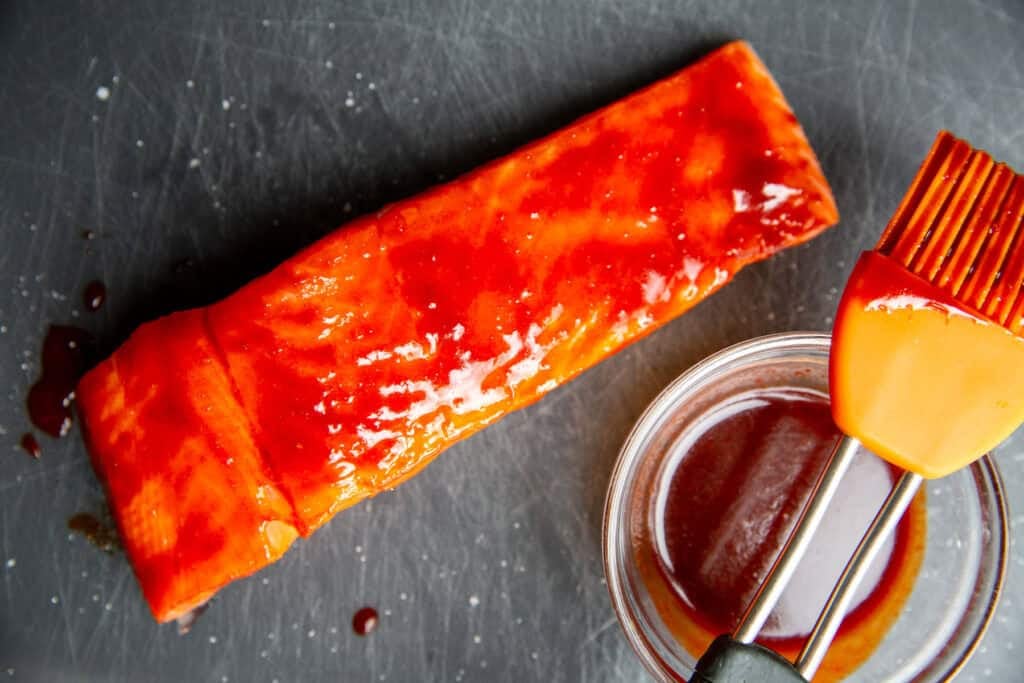
Step 1: Make the glaze and sauce
In a bowl, whisk together gochujang, tamari, maple syrup, rice vinegar, and sesame oil until smooth. Set aside two tablespoons of this mixture for the glaze. To the rest, stir in coconut yogurt and water to make a creamy sauce. Chill until ready to serve.
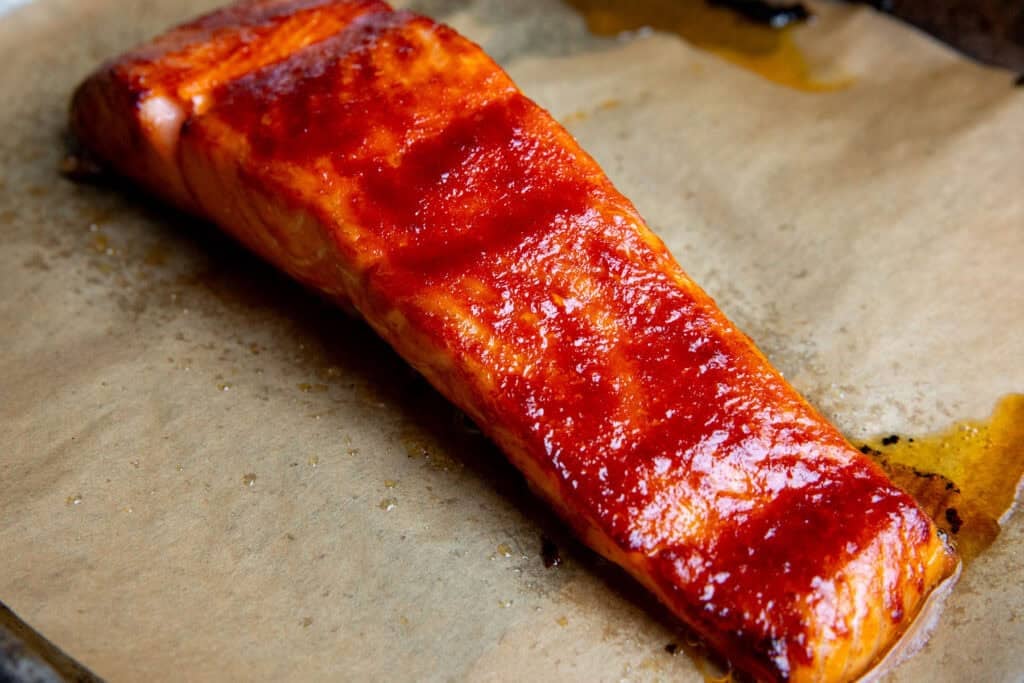
Step 2: Roast the Salmon
Arrange the salmon on a parchment-lined baking sheet and season lightly with salt. Brush it with the reserved glaze and let it sit for 5 to 10 minutes. Roast at 425°F until the salmon flakes easily but stays rosy in the center, about 15 to 17 minutes depending on thickness.
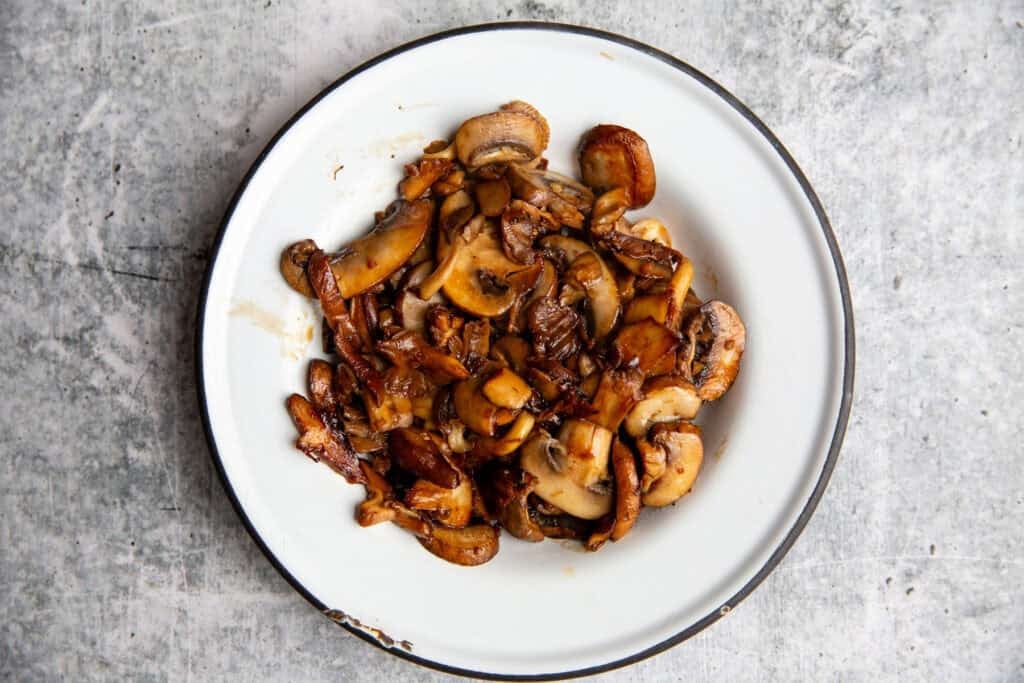
Step 3: Sauté the vegetables
Heat one tablespoon of oil in a large skillet over medium heat. Add sliced garlic and cook until fragrant, about 45 seconds. Add chopped bok choy, season with salt and pepper, and cook until crisp-tender, about 3 minutes. Squeeze over the juice of half a lime, season again, and transfer to a bowl. Wipe out the skillet. Add the remaining oil, along with minced ginger and mushrooms. Cook until golden, about 4 minutes. Add tamari and rice vinegar and cook until the liquid evaporates.
Step 4: Build the bowls
Spoon rice into bowls, add pieces of roasted salmon, and arrange the vegetables alongside. Drizzle with the creamy gochujang sauce and garnish with sliced scallions and sesame seeds.

Tips and Variations
- For a milder dish, use a smaller amount of gochujang or mix it with extra yogurt.
- The salmon can also be cooked in the air fryer at 400°F for 8 to 10 minutes.
- Try swapping in tofu, shrimp, or chicken for a twist.
- You can also change up the vegetables with sautéed spinach, broccoli, or roasted squash.
- Leftovers make a great lunch and can be stored in the refrigerator for up to two days.
Recipe FAQs
It's gently spicy, with a sweet and savory balance. You can adjust the heat by using more or less gochujang.
Yes. Use a certified gluten-free gochujang and tamari, and choose coconut yogurt instead of mayo for a dairy-free option.
It's great over rice with sautéed or roasted vegetables. You could also serve it with noodles or a crisp cucumber salad.
Yes, just thaw it completely and pat it dry before applying the glaze so it roasts evenly.
P.S. More Salmon Recipes:
Stay Connected

Subscribe
Get exclusive new weekly recipes (all gluten-free, but you'd never know it), along with tips for finding more intention, ease, and joy in the kitchen in my Mind, Body, Spirit, FOOD newsletter!
Get the Recipe

Easy Gochujang Salmon Bowls
Ingredients
Gochujang glaze and sauce
- 2 tablespoons gochujang (be sure to use a gluten-free brand if you can't eat gluten)
- 1 tablespoon low-sodium tamari or soy sauce
- 1 tablespoon maple syrup
- ½ tablespoon rice vinegar
- ½ teaspoon toasted sesame oil
- ½ cup plain coconut yogurt (I prefer Cocojune brand) or mayonnaise
- 2 teaspoons water
Salmon
- 1 ¼ - 1 ½ pounds salmon
- Salt and freshly ground black pepper
Vegetables
- 2 tablespoons neutral vegetable oil (such as grapeseed), divided
- 2 garlic cloves, thinly sliced
- 3 heads baby bok choy, coarsely chopped
- ½ lime
- 1 tablespoon minced ginger
- 8 ounces sliced assorted mushrooms
- 1 tablespoon low-sodium tamari
- 1 teaspoon rice vinegar
For serving (optional)
- Cooked short grain brown or white rice
- Sliced scallions
- Toasted sesame seeds
Instructions
Make the gochujang glaze and sauce
- Preheat the oven to 425˚F (220˚C)
- In a medium bowl, combine the gochujang, tamari, maple syrup, rice vinegar, and toasted sesame oil. Stir until smooth. Transfer 2 tablespoons of the sauce to a small bowl (this will be the glaze). To the remaining sauce, stir in the yogurt and water (if the sauce is still too thick for your liking, add a bit more water). Refrigerate the sauce until you're ready to serve. Do Ahead: The sauce can be refrigerated for up to 3 days.
Roast the salmon
- Arrange the salmon on a parchment-lined baking sheet. Season it lightly with salt, and brush it with the reserved glaze. Let the salmon sit at room temperature for 5-10 minutes. Roast the salmon until it flakes easily with a fork but is still rosy in the center, about 15-17 minutes, depending on the thickness of the fillet (if you're using a thin wild fillet, start checking the fish at 10 minutes).
Sauté the vegetables
- In the meantime, heat 1 tablespoon of the oil in a large skillet over medium heat. Add the sliced garlic and cook, stirring, until fragrant, about 45 seconds. Pile in the bok choy, and season with salt and pepper. Cook, stirring often, until crisp-tender, about 3 minutes. Squeeze in the juice from ½ lime, and season with salt and pepper to taste. Transfer the bok choy to a bowl.
- Wipe out the skillet. Add the remaining tablespoon of oil to the skillet, along with the ginger and mushrooms. Toss the mushrooms to coat in the oil, and season them lightly with salt. Cook, stirring occasionally, until golden, about 3-4 minutes. Stir in the tamari and rice vinegar. Cook until the liquid has evaporated and the mushrooms are tender, 1-2 minutes.
Build the bowls
- Spoon rice into serving bowls. Using a thin metal spatula, scoop the salmon off the pan (leaving the skin behind), arranging chunks in the bowls. Add the bok choy and mushrooms. Drizzle the bowls with the creamy gochujang sauce, and garnish with scallions and toasted sesame seeds, if you like.
Notes
- For a milder dish, use a smaller amount of gochujang or mix it with extra yogurt.
- The salmon can also be cooked in the air fryer at 400°F for 8 to 10 minutes.
- Try swapping in tofu, shrimp, or chicken for a twist.
- You can also change up the vegetables with sautéed spinach, broccoli, or roasted squash.
- Leftovers make a great lunch and can be stored in the refrigerator for up to two days.